Bluebird Habitat Supply — Est. 2024
Handcrafted
sanctuaries
for bluebirds.
Evidence-based nest box design. Cedar construction. Built in small batches, shipped with a placement guide that actually works.
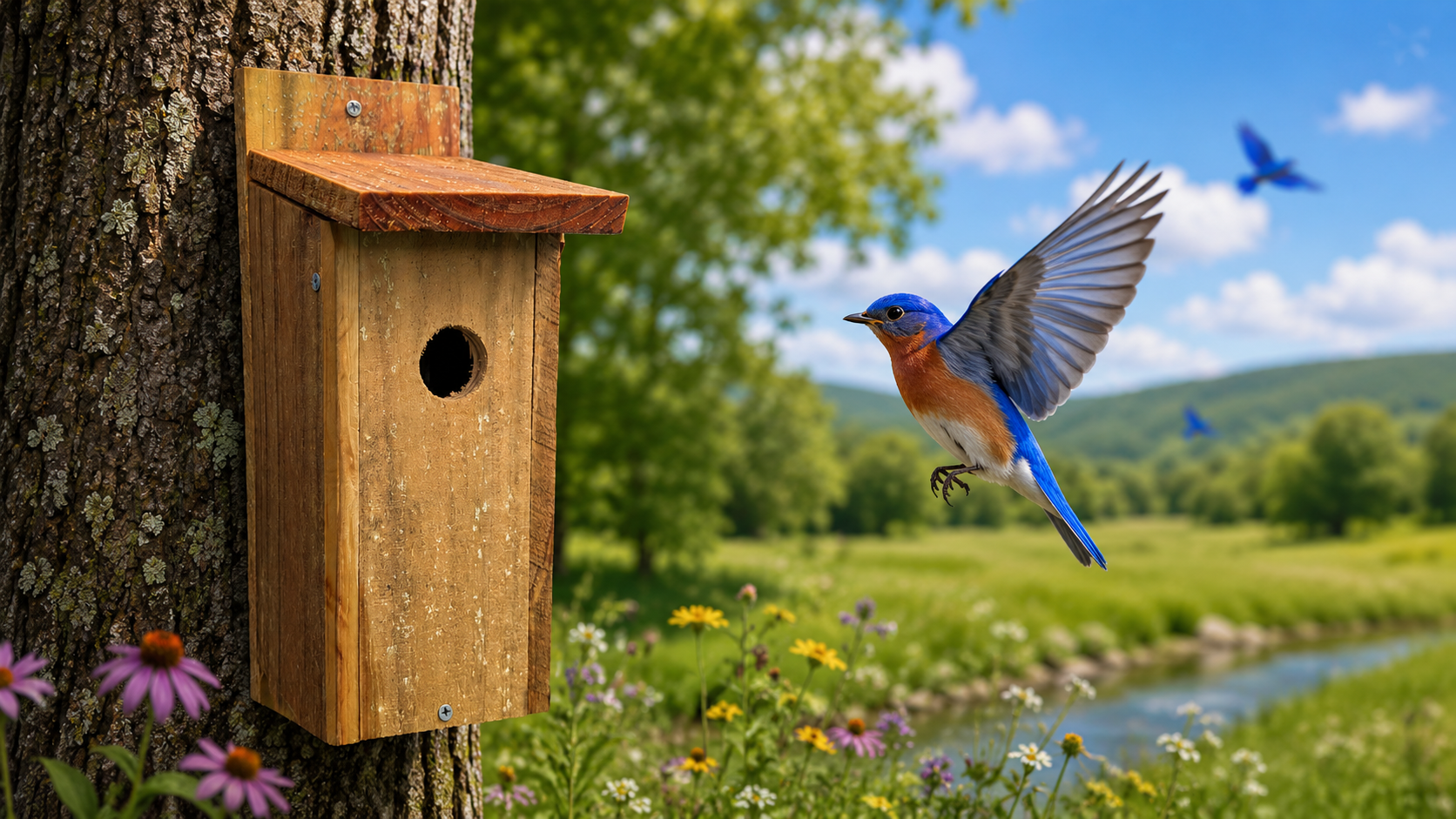
Occupancy rate
84%
first-season average
01
Design
Every dimension is evidence-based — entrance diameter, cavity depth, and floor size match decades of North American Bluebird Society research.
02
Source
We use naturally rot-resistant Western Red Cedar. No paint, no stain — just clean wood that ages well outdoors.
03
Hand Build
Cut, drilled, and assembled by hand in small batches. Each box is checked for square, fit, and drainage before it ships.
04
Field Test
We monitor boxes through full nesting seasons — tracking occupancy, clutch size, and fledgling success before refining the design.
05
Ship
Packed without plastic. Each order includes a placement guide with site-selection tips for first-season occupancy.
Shop by category
Everything a bluebird habitat needs
Purpose-built products for nesting, protection, feeding, and monitoring — chosen for bluebird outcomes, not for shelf space.
Why bluebirds?
A safe nest changes everything
Bluebirds are one of America's most loved backyard birds, but they need safe nesting spaces to thrive. With the right house, proper placement, and predator protection, your yard can become a welcoming habitat for generations of bluebirds.
Safe Nesting
Correct entrance size and cavity depth exclude starlings while keeping bluebirds comfortable.
Better Backyard Habitat
Open-field placement and predator guards turn your yard into a productive nesting site.
Support Native Birds
Every occupied box adds fledglings to a species that has recovered thanks to nest-box trails.
Habitat builder
Find the right bluebird setup
Answer four quick questions and we'll suggest the house, protection, and accessories that fit your yard.
Step 1 of 4
Do you already see bluebirds in or near your yard?
Seasonal guidance
Bluebird season made simple
Spring
Mount your box by early March. Bluebirds scout multiple cavities before committing.
Summer
Monitor weekly, keep mealworm feeders stocked, watch for a second brood.
Fall
Clean out the box, inspect predator guards, and re-tighten hardware.
Winter
Leave boxes up — bluebirds roost inside during cold snaps.
Built for bluebirds
Chosen for outcomes, not aisles
We focus specifically on bluebirds so every product is chosen with nesting safety, habitat success, and long-term durability in mind.
Newsletter
Get bluebird nesting tips
Join our list for seasonal bluebird tips, habitat setup guides, product updates, and backyard birding ideas.
Featured product
Premium Cedar Bluebird House
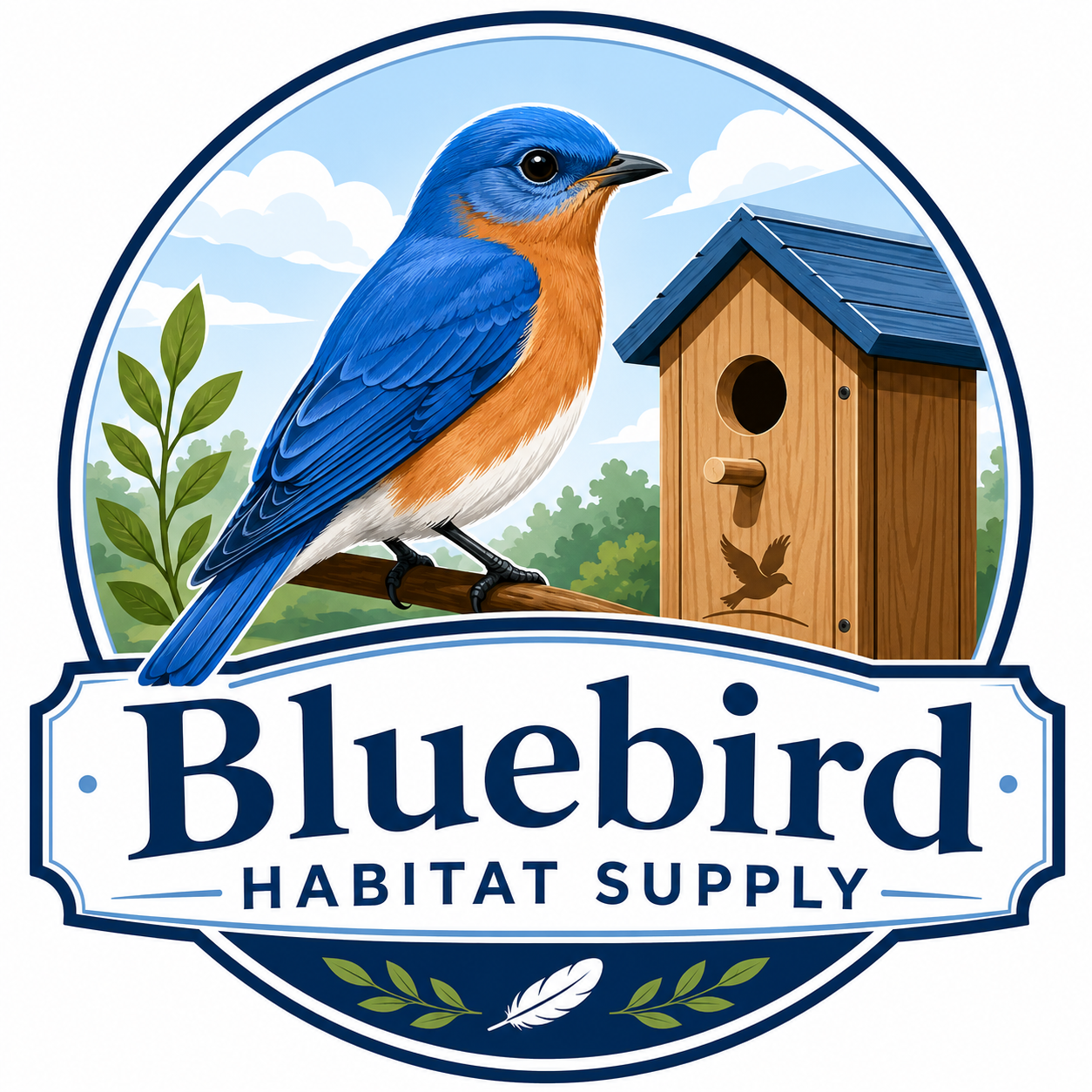
A durable, bluebird-friendly nesting box designed for proper ventilation, easy cleaning, and safe seasonal nesting. Cut from naturally rot-resistant Western Red Cedar and sized to the North American Bluebird Society standard.
- —Correct 1½" entrance hole for Eastern Bluebirds
- —Ventilation slots and drainage holes
- —Side clean-out panel for weekly monitoring
- —Rough-cut interior helps fledglings grip
Suggested bundles
Kits built around bluebird outcomes
Beginner Bluebird Habitat Kit
- —Premium Cedar Bluebird House
- —Mounting pole
- —Predator baffle
- —Placement guide
Includes Amazon partner picks
Premium Backyard Bluebird Kit
- —Premium cedar house
- —Full pole system
- —Predator guard
- —Mealworm feeder
- —Seasonal care guide
Includes Amazon partner picks
Gift Set for Bird Lovers
- —Decorative bluebird house
- —Small feeder
- —Printed bluebird guide
- —Gift packaging
Includes Amazon partner picks
Object Catalog
The Collection
Small seasonal batches. Each piece is numbered. Specs, materials, and habitat fit listed for every item.
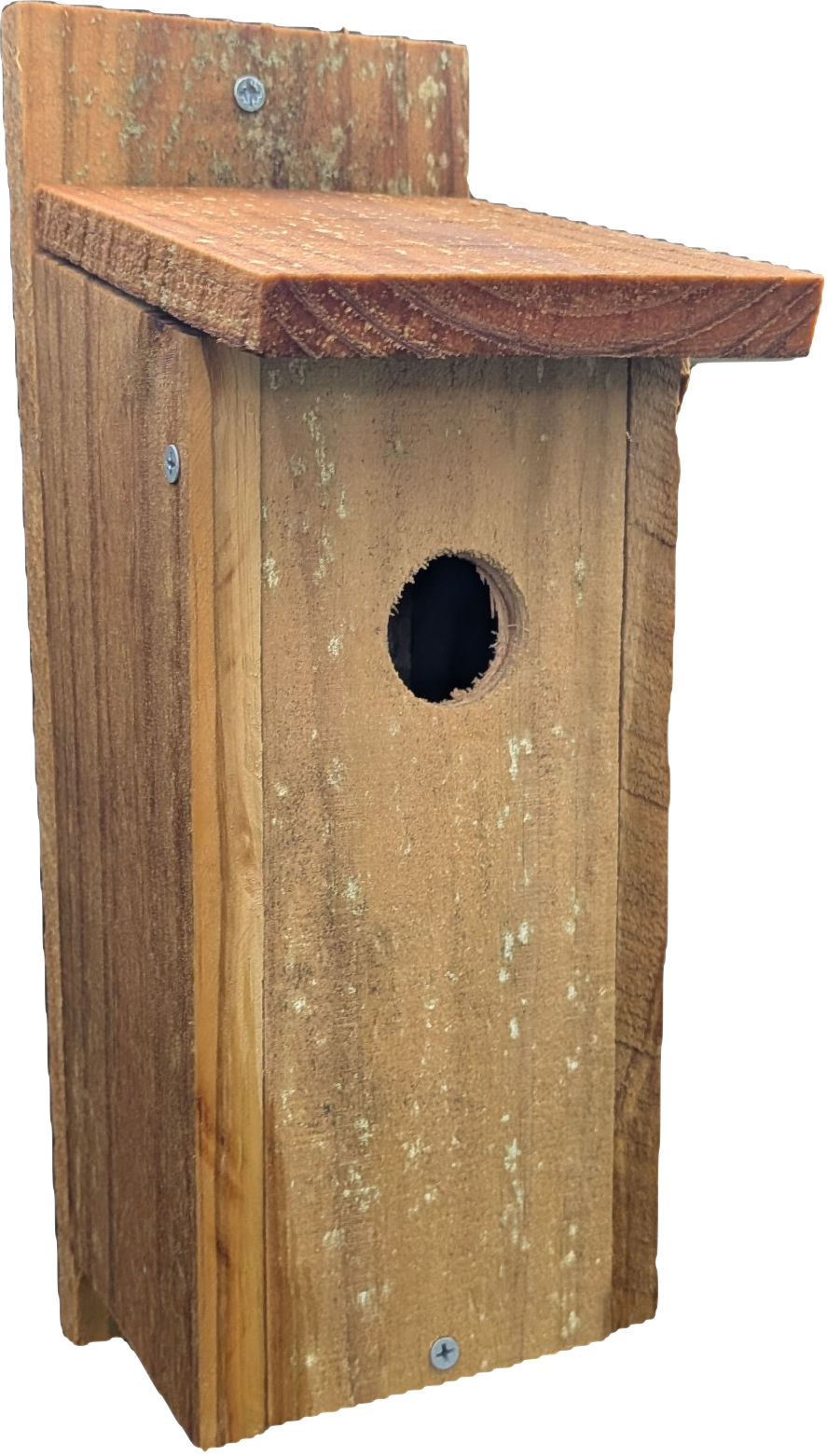
No. 001
Summer 2025 · 12 pcs
Eastern Standard
Classic nest box · cedar build
Case Study — 01
Eastern Bluebird House
The Challenge
Eastern Bluebird populations declined by over 90% in the mid-20th century. The primary driver was cavity scarcity — aggressive House Sparrows and European Starlings outcompeting bluebirds for every available nesting site. Recovery hinged on providing nest boxes that exclude starlings while remaining accessible to bluebirds.
The Design
The entrance diameter of exactly 1.5 inches is the critical dimension — large enough for a bluebird to enter, too small for a starling. The 5.5" × 5.5" floor gives the female enough room to build a nest cup without crowding. The 10.5" cavity depth discourages sparrow nesting. A side-opening panel allows weekly monitoring without disturbing the nest.
Materials
- —Western Red Cedar — naturally rot and insect resistant
- —Galvanized screws — no corrosion after seasons of wet weather
- —Rough-cut interior — provides grip for nestlings
- —No paint, stain, or preservatives — safe for birds
Outcome
Customer-monitored boxes across Virginia, Tennessee, and Ohio averaged 84% first-season occupancy when mounted in open field habitat with a predator guard. Average fledglings per occupied box: 3.8.
Field Notes
The Eastern Bluebird
Sialia sialis — what you need to know before putting up a box.
Habitat
- ·Open fields, meadows, and farmland with low ground cover
- ·2–3 acres of open foraging space per pair
- ·Avoid dense woodland — bluebirds hunt by sight from low perches
- ·Near water is beneficial but not required
Nesting
- ·Eastern Bluebirds are cavity nesters — they do not excavate
- ·Nesting season: March through August in most of the US
- ·2–3 broods per season; 4–6 pale blue eggs per clutch
- ·Monitor boxes weekly to check for house sparrow intrusion
Conservation
- ·Populations dropped 90% in the mid-20th century
- ·Nest box trails have driven recovery since the 1970s
- ·House sparrows and starlings are the primary competition
- ·A predator guard baffle roughly doubles fledgling survival
Research Brief
Eastern Bluebird Life History
Practical field summary for backyard stewards, adapted from Cornell Lab of Ornithology's species guide and rewritten for quick implementation.
Habitat
Open country with scattered trees
Eastern Bluebirds do best where they can watch open ground from low perches: pastures, field edges, parks, and roomy suburban yards.
Food
Insects first, berries in colder months
During warm seasons they forage mostly for insects near the ground. In fall and winter, fruit becomes a larger part of their diet.
Nesting
Cavity nester with frequent re-use
They nest in natural cavities or well-sized nest boxes. Typical seasons include one to three broods, with the female doing most nest-building.
Behavior
Perch-and-drop foraging style
Bluebirds often perch on posts or wires, then drop to catch prey. Nest cavities are contested, so pair defense and monitoring matter.
Conservation
Recovery supported by nest-box programs
Population trends improved over recent decades as communities adopted better nest-box design and placement.
Nesting Facts
Configurator
Build Yours
Choose your specifications. Price updates live. Custom configurations outside the standard options can be submitted as an inquiry.
01 Size
02 Material
03 Mounting Style
04 Entrance Diameter
05 Roof Style
Your Configuration
Standard configs ship in 5–7 days. Custom builds fulfilled by inquiry. Secure checkout powered by Stripe.
“Bluebirds moved in within two weeks. The entrance size made all the difference — no sparrows.”
Rachel M.
Virginia
“Incredibly solid construction. The cedar looks great after two full seasons outdoors.”
Tom K.
Tennessee
“The placement guide that came with it was worth as much as the box. Finally got my field positioning right.”
Linda H.
Ohio
Partner Products
Recommended Supplies
92" Pole Mount Kit + Squirrel Baffle
Heavy-duty steel pole with integrated predator baffle
Mounting
Metal Entrance Hole Guard 1½"
Prevents predator reach-in; fits standard bluebird boxes
Protection
Kingsyard Caged Mealworm Feeder
All-metal, squirrel-proof, weatherproof with tray
Feeder
Kaytee Dried Mealworms 2lb
Starter-size bag — bluebird favourite
Food
FAQ
Common questions
Get in touch
Contact us
Questions about placement, bulk orders, or want to share a nesting season report — we read everything.